The University of New Mexico (UNM), is located in midtown Albuquerque, a small city of about half a million people, located at just over a mile above sea level in the Rio Grande Rift. Albuquerque serves as the epicenter of cultural and economic life in New Mexico. The campus itself supports roughly twenty-two thousand enrolled students. We also serve as the focal point for a system of branch campuses including branches in Gallup, Taos, Valencia, and Los Alamos.
The sponsoring organization at UNM, the Center for Teaching & Learning, is housed at the historic Zimmerman Library, in the heart of the campus. UNM is a picture of Southwestern charm and beauty, with a distinctive campus architectural style known as Spanish Pueblo Revival, a mixture of Indigenous and European forms and approaches that found their greatest expression in the buildings of John Gaw Meem, the architect responsible for the distinctive look on campus. In addition to our structures, UNM is certified as a Tree Campus and a global Level I Arboretum, so despite our limited water there is an abundance of greenery and unique flora.
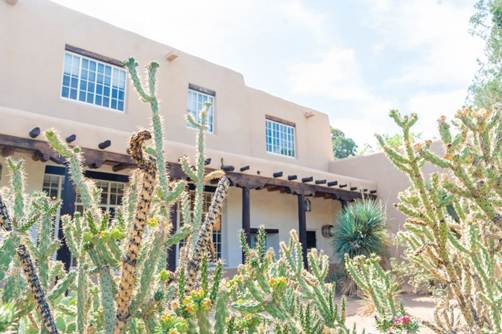
Established in 1706, the city of Albuquerque was originally a series of villages clustered along the Rio Grande. The university was founded in 1889 as the second institution of higher learning in what was then the New Mexico Territory. It grew on the mesa east of downtown, becoming the centerpoint of the city’s midtown area.
UMM is a short drive or bus ride to and from the Albuquerque International Sunport, and the Nob Hill district offers numerous restaurants and services immediately surrounding the university. We encourage our visitors to get out and eat the delicious food! In particular, we recommend grabbing some traditional New Mexican cuisine, with your choice of red chile, green chile, or Christmas (both).
For people that would like to experience some of the history and nature that New Mexico has in spades, there are: Old Town Albuquerque, with a colonial-style Spanish church and relics from a forgotten battle during the Civil War; the BioPark, a complex with gardens, zoo, and an aquarium near the river; the Indian Pueblo Cultural Center that details the vibrant cultural life of 19 Pueblos in NM; and the riparian trails and Open Spaces along the Rio Grande, accessible at multiple parks. In addition, you can journey a little further afield to the Sandia Peak Tramway, the longest aerial tram in North America, to see Albuquerque from a different viewpoint; take the Rail Runner train system north an hour to visit Santa Fe, the oldest state capital in the US and home to numerous historic sites; or rent a car and visit Taos Pueblo, a UNESCO World Heritage Site home to two of the oldest continuously inhabited buildings in the Americas and the organizational epicenter of the 1680 Pueblo Revolt.